10 Pro Nabana no Sato Winter Illumination Photography Tips
Capturing the magic of Japan requires specific skills. Use our Nabana no Sato winter illumination photography tips for 2026. This park near Nagoya offers world-class light displays. You can create stunning images with the right approach and gear.
Mastering Camera Settings for Night Lights
For official information, visit Nagoya travel info.
For practical details and last-minute changes, use Nagoya travel info.
Shooting at night presents unique technical challenges. Set your camera to a wide aperture like f/2.8. This allows more light to reach your sensor. It also creates a beautiful soft background for your photos.Increase your ISO to around 800 or 1600. Modern cameras handle these levels without much noise. Keep your shutter speed fast enough to avoid blur. This is vital if you are shooting handheld without support.
Always shoot your images in RAW format. This file type preserves more data for editing later. You can easily fix exposure and colors in post-processing. Proper settings are the foundation of great Nabana no Sato Illumination 2026 photos.
Capturing the Iconic Light Tunnel
The 200-meter light tunnel is a major highlight. This area is often very crowded with many tourists. Aim your camera upward to exclude people from the frame. This technique emphasizes the vast ceiling of glowing lights.
Use a wide-angle lens to capture the full scale. Lenses between 14mm and 24mm work best here. These lenses create a sense of depth and immersion. You can see more details in our winter light tunnel guide for visitors.
Adjust your white balance to avoid orange tints. The "Tungsten" or "Incandescent" setting often looks most natural. Experiment with different settings to see which looks best. The glowing petals require careful exposure to show detail.
Best Timing for Perfect Lighting
Arrive at the park before sunset to prepare. The "blue hour" provides a beautiful deep blue sky. This creates a stunning contrast with the golden lights. It happens shortly after the sun goes down.
Stay until later in the evening for fewer crowds. Most tour groups leave about two hours before closing. This gives you more space for clean compositions. Check the best time to visit for your 2026 trip planning.
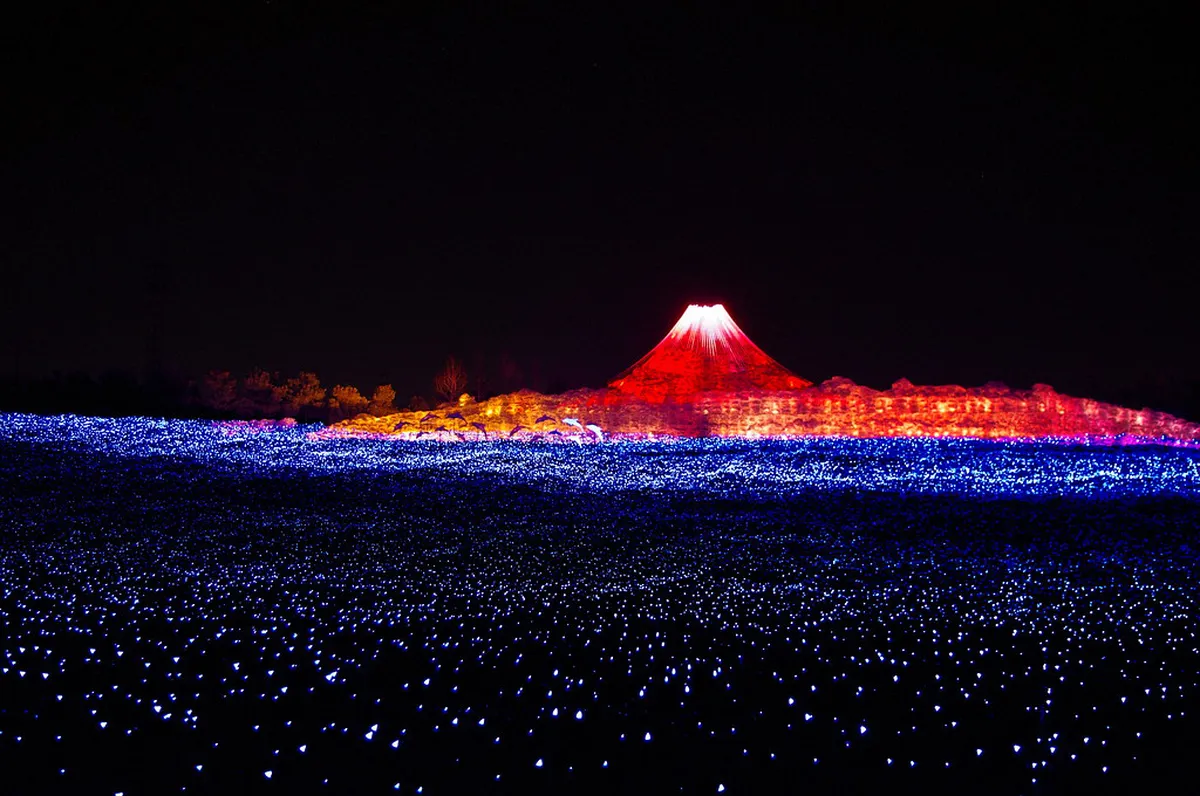
Rainy nights offer amazing reflection opportunities on the ground. Puddles act like mirrors for the millions of LED bulbs. Don't let a little rain stop your photography session. Wet surfaces can make your images look more professional.
Essential Photography Gear for Nagoya
Tripods are often restricted during peak weekend times. Bring a monopod or use a lens with stabilization. These tools help you get sharp shots in low light. Check the Japan National Tourism Organization for local park rules.
Keep extra batteries in your pocket to stay warm. Cold winter weather drains battery life very quickly. A warm battery will last much longer than a cold one. This is a common mistake for many winter photographers.
Bring a microfiber cloth to clean your lens often. Condensation can form when moving between warm and cold areas. Keep your gear protected from the winter mist. You should also explore other Nagoya winter events during your stay.
Frequently Asked Questions
Are tripods allowed for Nabana no Sato winter illumination photography?
Tripods are generally discouraged during busy periods and weekends. Use a monopod or increase your ISO for handheld shots. Always check the latest park signs for specific area restrictions. This ensures a good experience for all visitors in 2026.
What is the best lens for Nabana no Sato photography?
A wide-angle lens with a fast aperture is best. Look for a 16-35mm f/2.8 or a 24mm f/1.4 prime lens. These allow you to capture wide scenes in low light. They are perfect for the tunnels and large light fields.
How do I avoid blurry photos at night in Nagoya?
Use a fast shutter speed and turn on image stabilization. Lean against a fence or post for extra stability. Keep your arms tucked close to your body while shooting. This technique helps minimize camera shake during long exposures.
Follow these Nabana no Sato winter illumination photography tips for success. Your 2026 trip to Nagoya will be truly unforgettable. Remember to enjoy the view while you take your photos. Start planning your creative winter adventure in Japan today!